
Which Forest Supply Chain Policies Work for Conservation and Local Livelihoods?
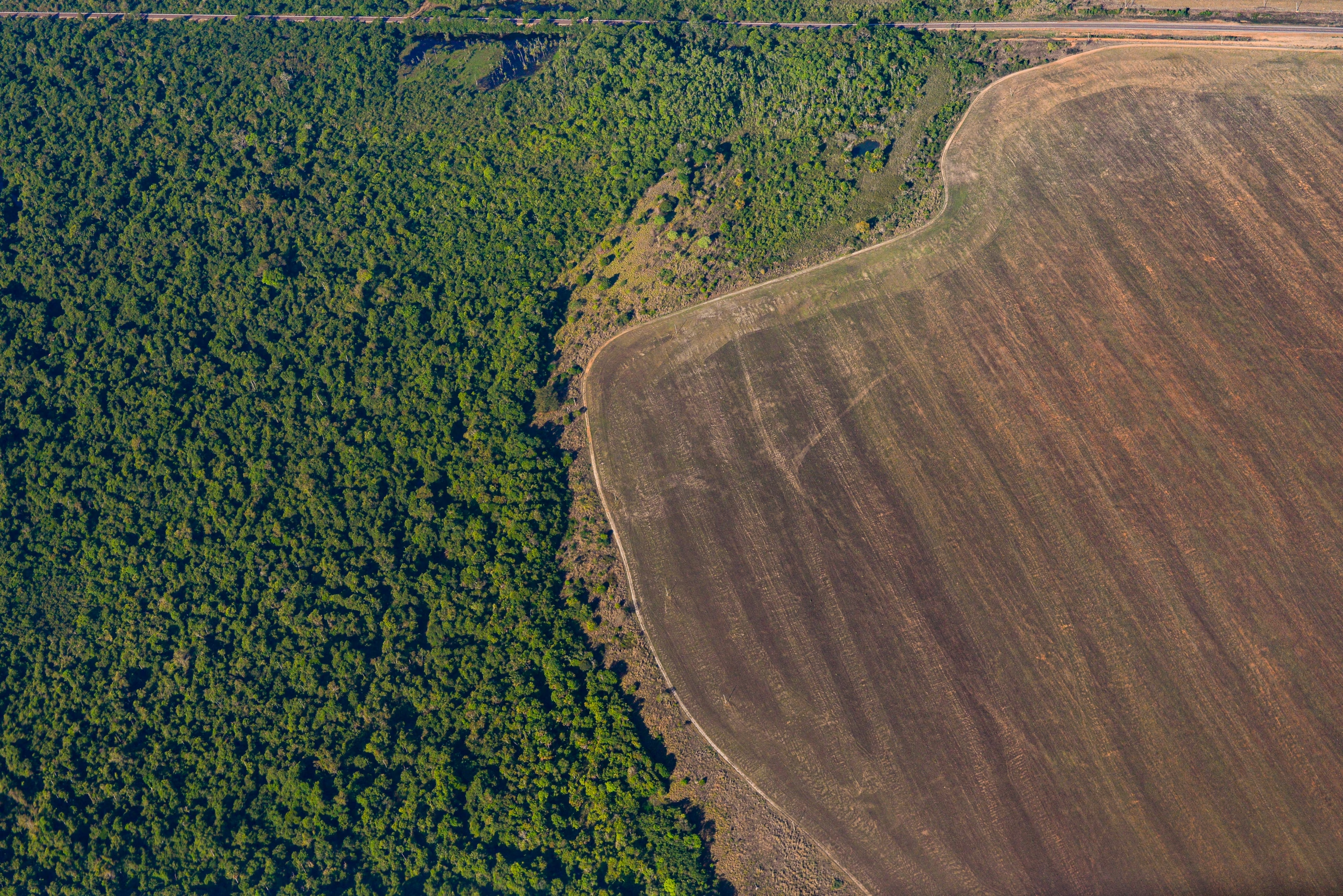
Agricultural production is by far the greatest direct driver of tropical forest loss, with around 2/3 of tropical deforestation being attributable to this industry. External pressure applied by the public, NGOs and governments have compelled corporate stakeholders to commit to more sustainable practices, such as zero-deforestation commitments (ZDCs), which promise to eliminate deforestation from their supply chains. It is important to leverage this international push for sustainability, especially since local institutions tend to lack the power to protect forests in key at-risk regions. However, there is a substantial lack of knowledge concerning how effectively these commitments stem forest loss, and even more so regarding how they affect the livelihoods of communities in the region.
Private sector organisations and governments have rolled out ZDCs or similar policies across Africa, South America and Southeast Asia, creating a valuable opportunity for a pan-tropical analysis of their efficacy. Capitalising on this opening, this research seeks to overcome the methodological and geographical limitations of the existing literature on company supply chain policy. It will achieve this by examining conservation and livelihood outcomes simultaneously, assessing the mechanisms of policy impact and employing a comparative approach across different regions and commodities. By using a cross-continental approach, this project will generate comparative and generalisable insights into the conditions under which forest supply chains can both support conservation and improve local livelihoods. This will directly inform the design and implementation of effective and equitable supply chain policies across the globe.