
Using Molecular Engineering to Enhance the Thermoelectric Performance of Polymers
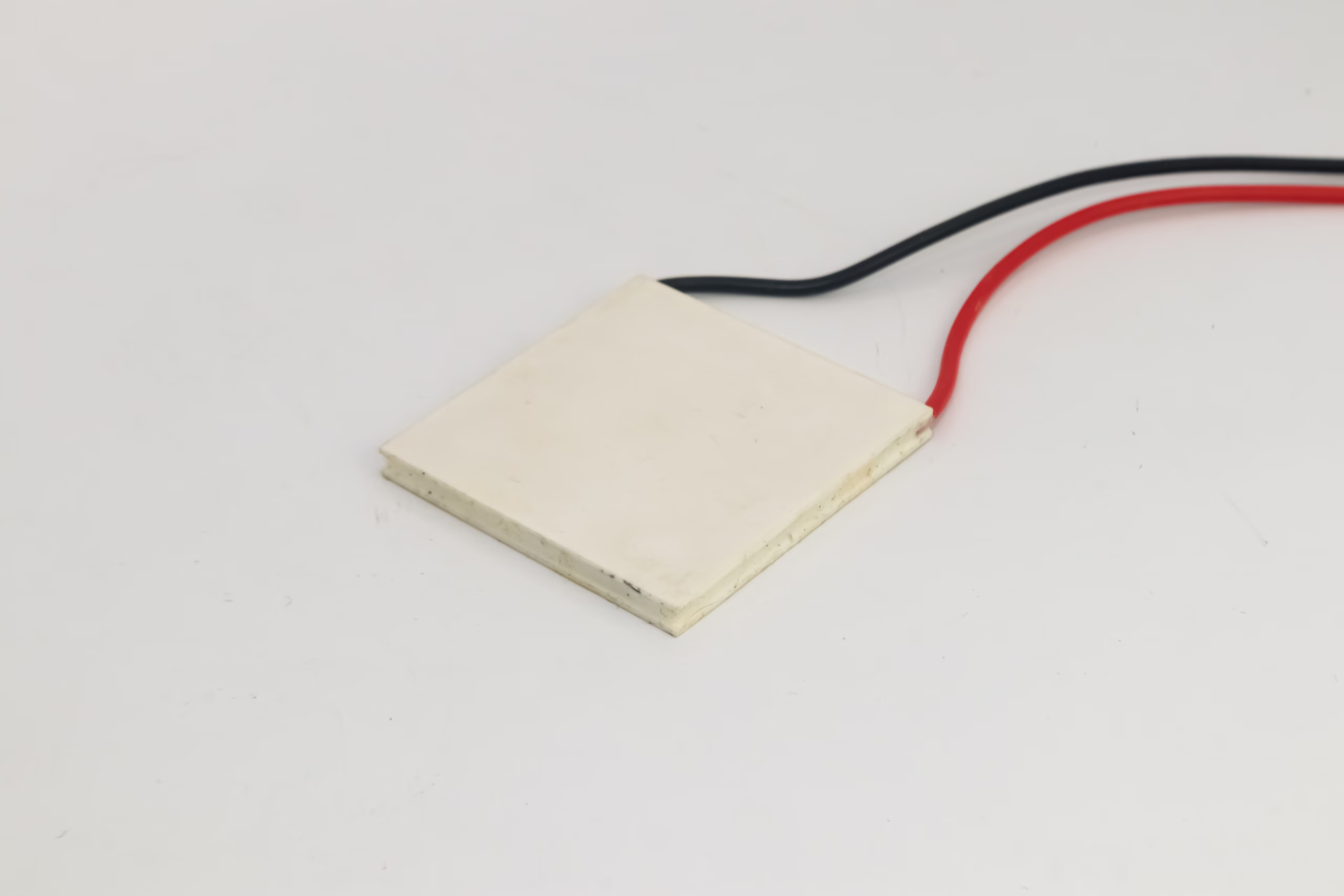
Thermoelectric (TE) materials provide a promising route for converting waste heat into useful electricity, thereby improving energy efficiency and supporting low-carbon technologies. Conjugated polymers (CPs), a unique class of organic macromolecules, are particularly attractive for flexible and lightweight TE materials due to their mechanical flexibility, ability to be disperse easily in solution, and tunable electronic structures. However, their performance is still limited by the challenge of simultaneously achieving high electrical conductivity, the ability to produce a large voltage from a small change in temperature (a large Seebeck coefficient), and low thermal conductivity.
This study will aim to improve the TE performance of CPs through molecular engineering. Using a number of structural tweaks to the polymer, this research seeks to enhance charge transport while maintaining favourable TE properties. The current strategies include eliminating homocoupling defects to control crystallinity and improve charge mobility, and introducing ether-based side chains to modulate polarity and electronic energy levels, thereby improving dopant compatibility and charge transport. The resulting structure–property relationships are expected to provide mechanistic insight into charge transport and TE conversion in CPs, offering molecular design guidelines for helping charge move faster, doping efficiency, and ultimately the total electrical output. With these guidelines in mind, the performance of CPs as thermoelectric materials can be improved, offering a practicable step towards increasing the energy efficiency and reducing the emissions of relevant technologies.