
Uncovering the Social and Political Implications of Conservation Technology
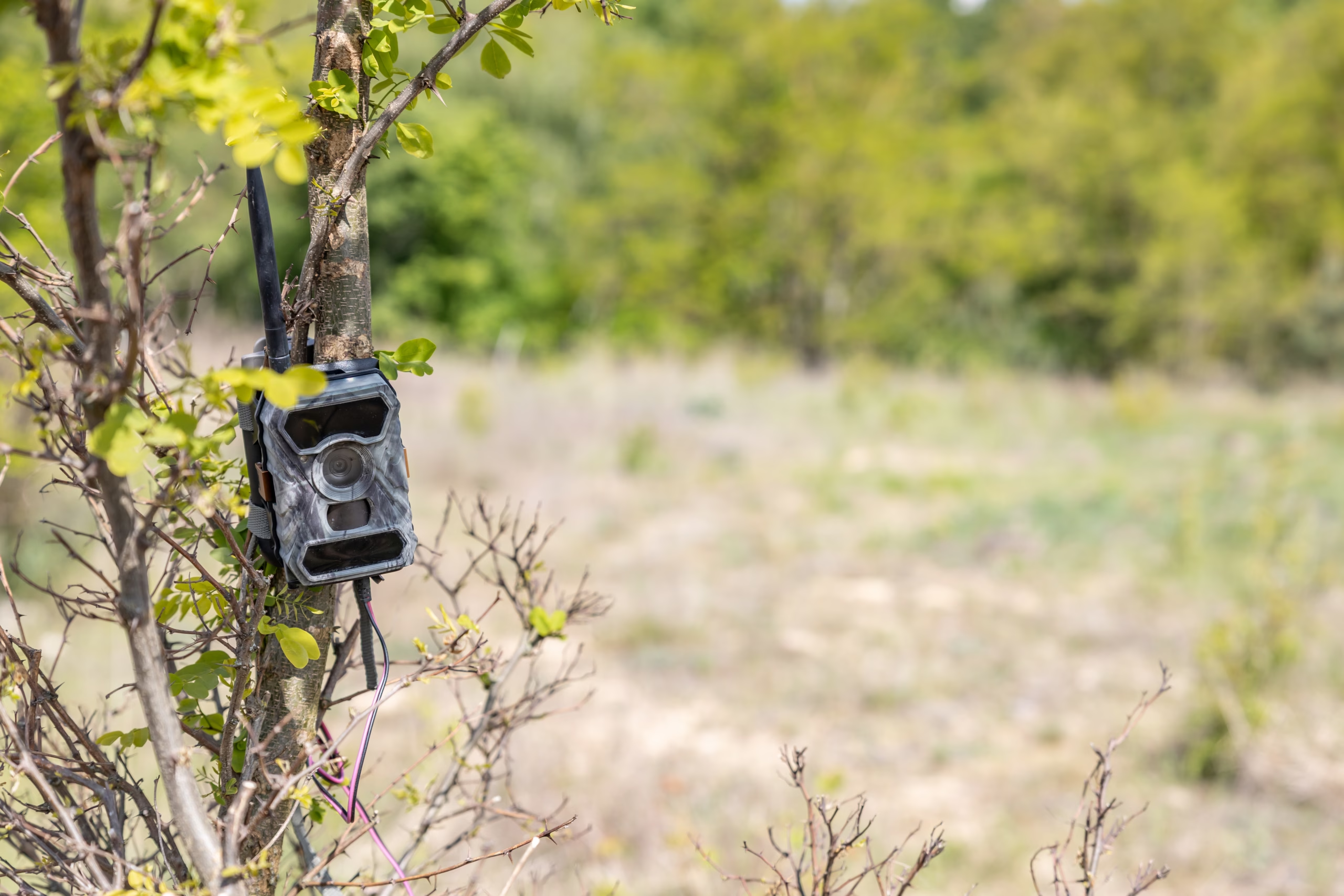
As the scope for applying emergent technologies in conservation rapidly increases, so does the uncertainty surrounding the social and political risks that accompany them. Moreover, these unintended consequences operate at vastly different scales, which means monitoring their impact becomes increasingly important. To address this uncertainty, the Conservation Research Institute is spearheading efforts at the University and across the globe to ensure that new digital technologies can be used to further conservation science in an equitable and sustainable way.
At a local level, Dr Trishant Simlai’s work focuses on the use of camera traps for wildlife monitoring in north Indian communities. The outputs from this research galvanised discourse in India about the use of these technologies, and have also contributed to legal scrutiny of wildlife surveillance practices, including a case brought before the Supreme Court of India concerning privacy and rights in communities affected by these technologies.
Professor Chris Sandbrook has been studying the implications of artificial intelligence for conservation at a more global level. This research has contributed significantly to international policy by helping to develop an IUCN Congress resolution that highlighted the need for a global policy framework on maximising the benefits of AI to conservation while minimising the associated risks. The resolution was met with an overwhelming consensus, and Professor Sandbrook is now working with the IUCN to support its implementation.