
Testing Practical Approaches to Restoring Forest and Biodiversity in Oil Palm Plantations
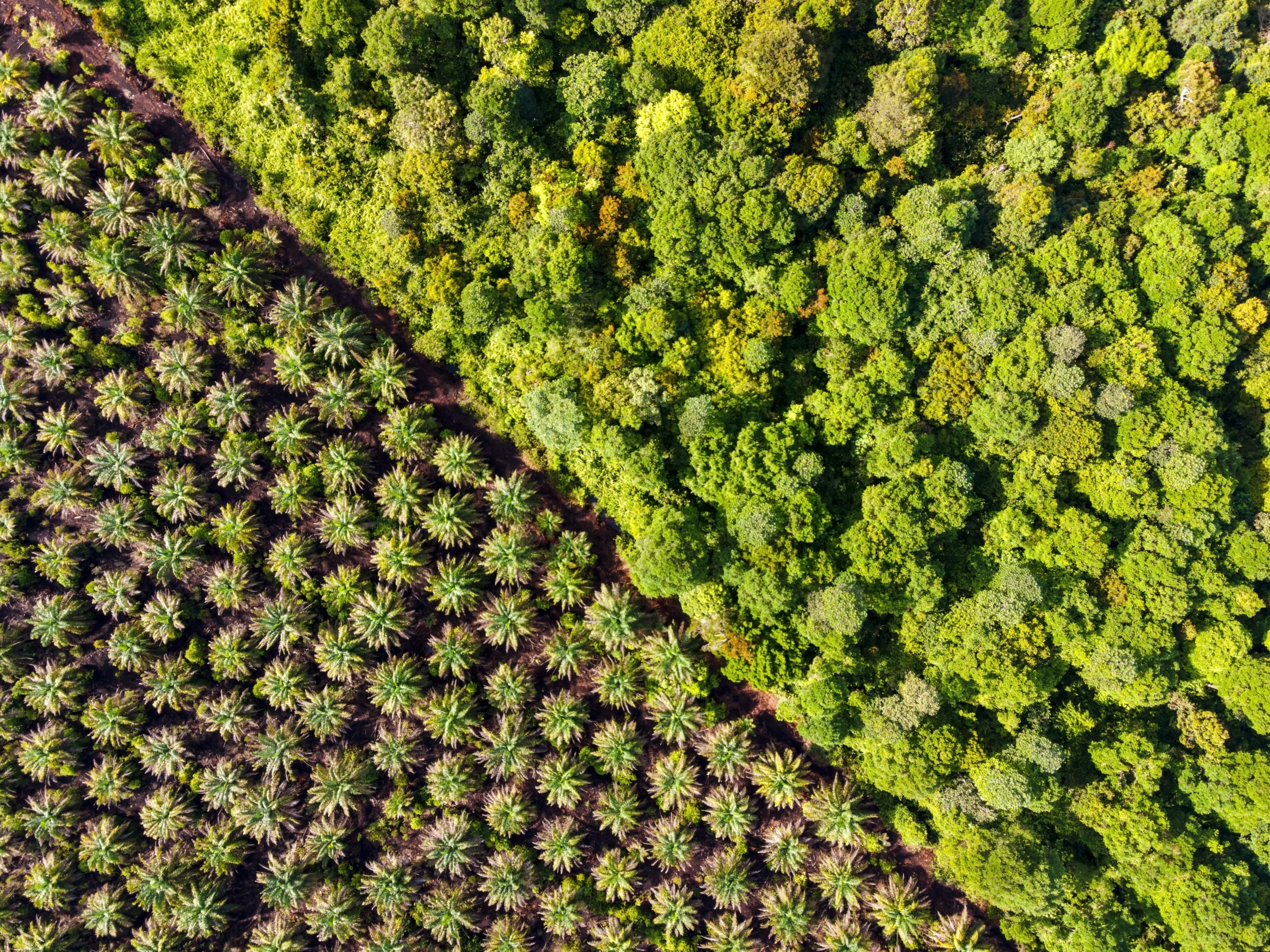
A large amount of global biodiversity loss and ecosystem degradation can be attributed to agriculture. Southeast Asia is among the most affected regions, owing to the rapid expansion of palm oil plantations since the 1980s. That being said, oil palm is a relatively high yielding crop and perennial by nature, meaning its spatial footprint per unit production is low and complex vegetation structure can evolve during the lifetime of a plantation. On top of this, oil palm production is central to the economies of many Southeast Asian countries. This context places oil palm as an important study system for investigating how tropical agriculture can become more sustainable.
The project is based in Riau, Indonesia, and investigates a number of measures in oil palm plantations that can help to restore biodiversity and natural forest habitat. So far, the team have shown that herbicide use can be reduced on understory plants while maintaining production targets, which benefits biodiversity. Additionally, they have found evidence to suggest that active restoration (where trees are actively planted) creates better microclimates than passive restoration. Both these findings and others will inform more sustainable practices across the 29 million hectares of oil palm plantations globally. More generally, this project demonstrates the power of conservationists working collaboratively with industry and local communities to produce scalable models of sustainable agricultural practice.