
How kelp can slow climate warming
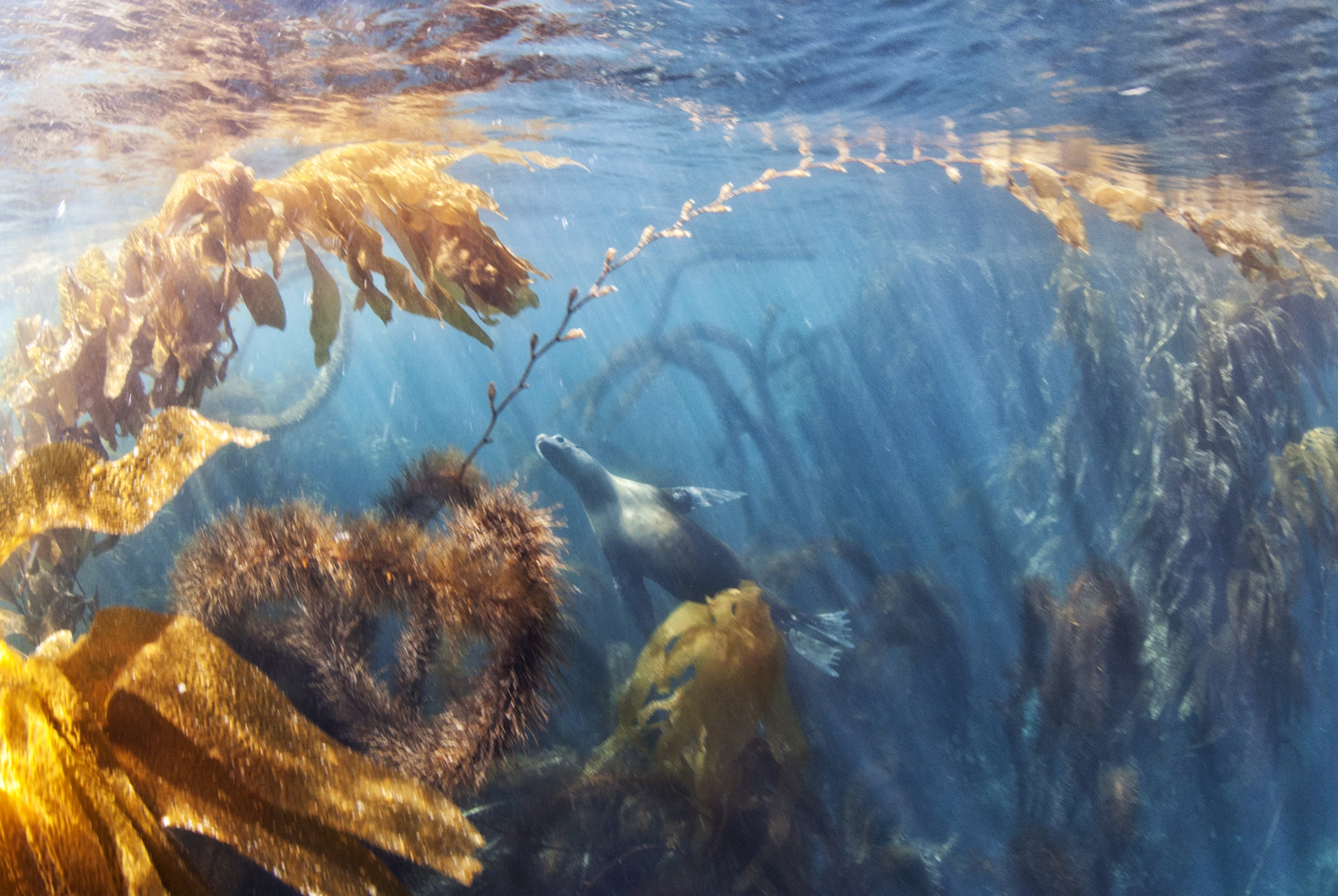
As a fast-growing marine organism, kelp has significant potential for carbon sequestration and could potentially play a crucial role in mitigating climate change.
Depending on the species, kelp can live for over a year and, during its life, can grow from two to 30 metres tall, with some species reaching growth rates of up to 61 centimetres per day. This rapid growth increases its capacity for photosynthesis, which, in turn, increases the absorption of carbon dioxide from the surrounding environment.
When kelp reaches the end of its life cycle, much of the carbon it has absorbed is stored in its tissues. As the kelp decomposes and sinks to the ocean floor, this carbon is effectively sequestered, delaying its release back into the atmosphere. Due to its high growth rate compared to land forests, kelp offers a unique advantage in terms of carbon sequestration, capturing CO2 at a faster rate than many land-based ecosystems.
At CCR, we are trying to further increase our understanding of how we might get more macroalgae to grow and provide new ecosystems in the ocean, together with a flux of carbon from the surface waters to the deep ocean. This project is being undertaken in collaboration with groups such as Kelp Blue.