
Reducing the cost of battery recycling
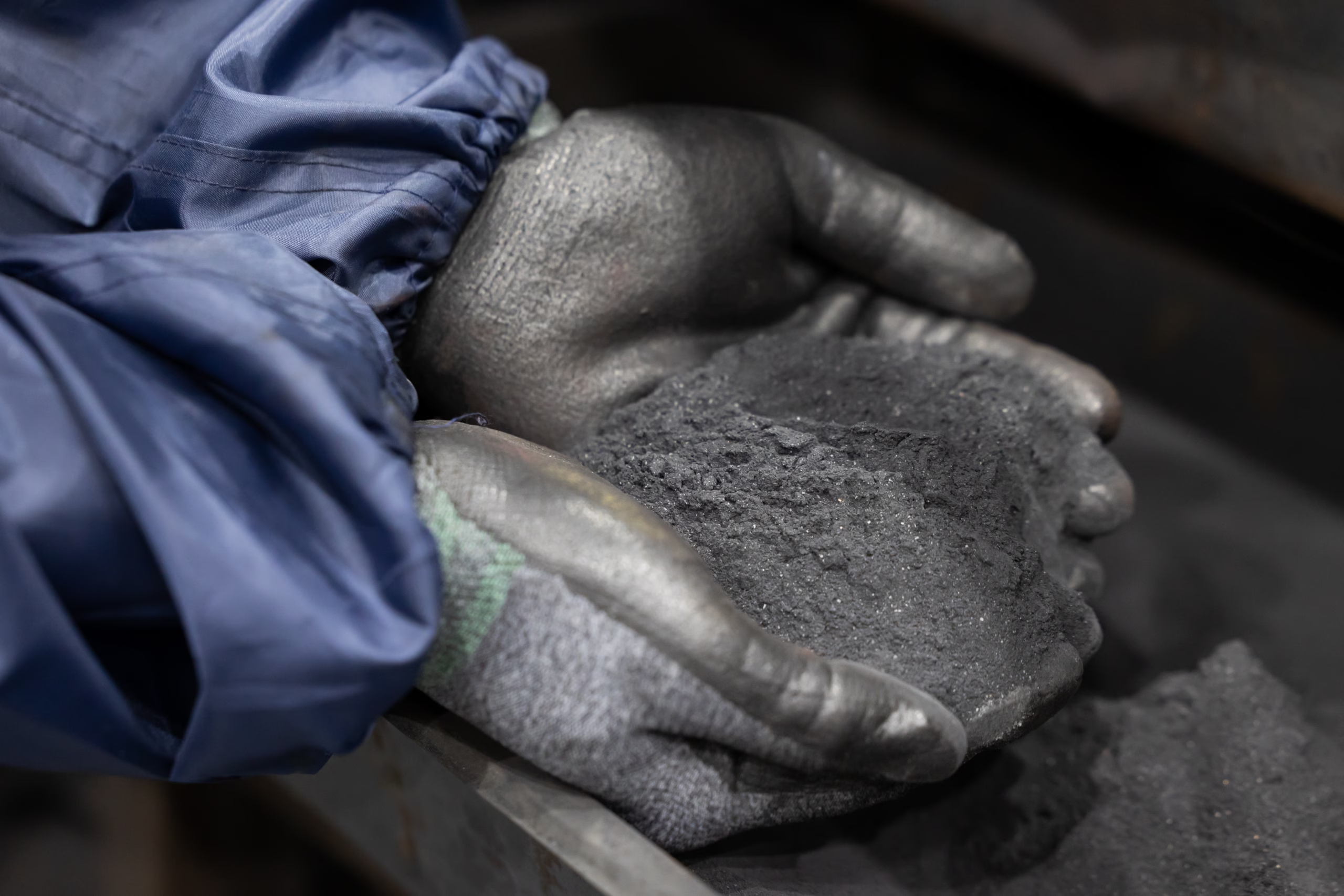
Scaling battery-material production is essential for achieving net-zero energy systems, but doing so without addressing resource sustainability risks significant environmental, humanitarian and economic costs. Currently, much lithium-ion battery waste, processed as “black mass”, is recovered using energy-intensive smelting or complex and costly chemical processes. Developing efficient, economical and scalable recovery technologies therefore remains a major challenge to closing the battery-material loop.
This study presents a zero-waste, room-temperature process for rapidly recovering high-purity battery materials from black mass. Developed at the University of Cambridge, the patented method achieves approximately 99% metal recovery within minutes, reuses reagents in a closed-loop system and avoids toxic by-products. It has been validated using both purified cathode materials and commercial black mass and is designed for industrial scale-up. By addressing a key barrier to economical metal separation, this technology could reduce reliance on primary extraction and support more localised, circular and resilient battery supply chains.