
Re-imagining safe and sustainable shellfish aquaculture
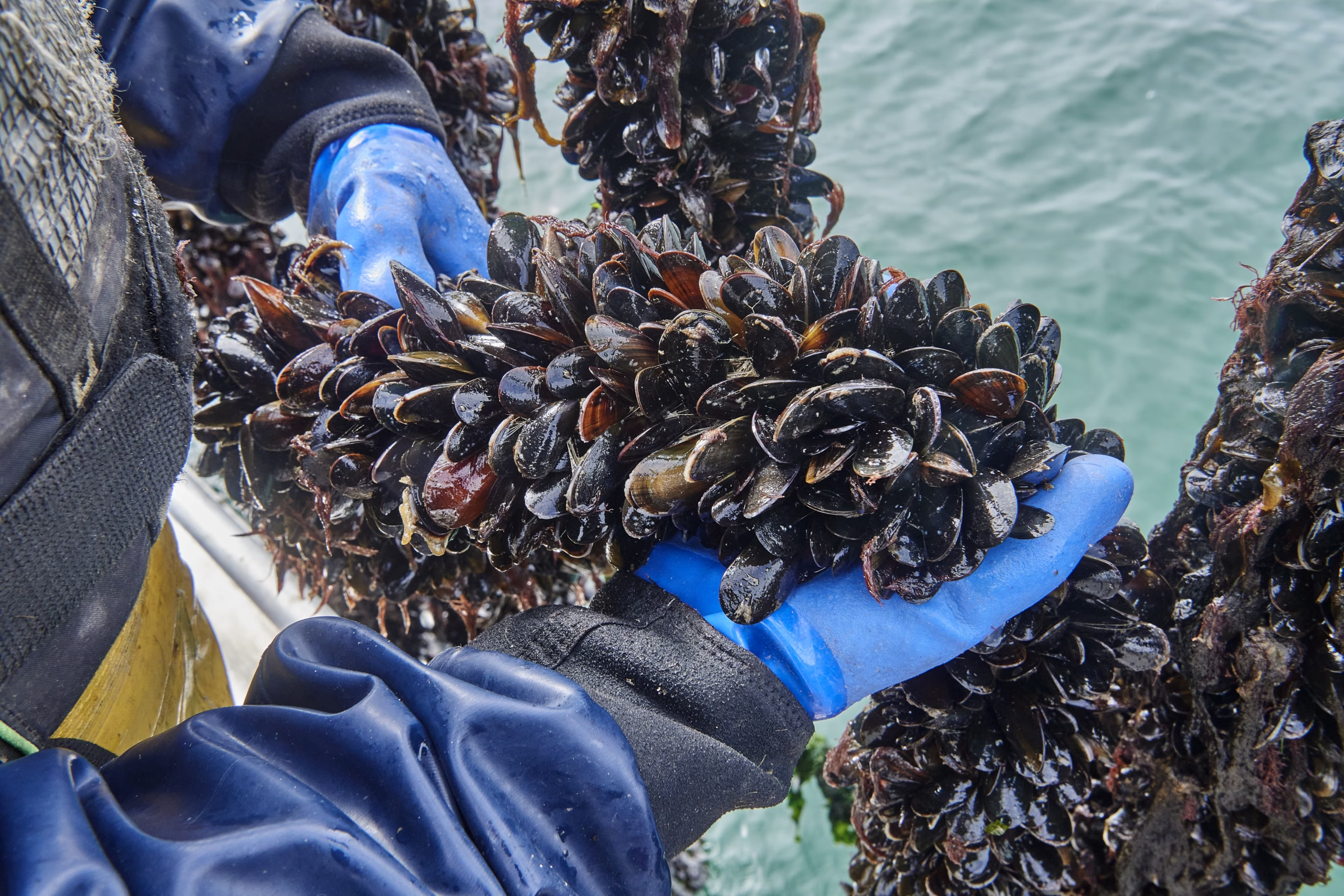
Bivalves are unusual foods environmentally; they are one of the very few foods where the more we farm, the better the environment gets. Adult animals need no added feed, fertiliser or freshwater, and a single mussel can filter more than 50 litres of water a day. Bivalve farms and reefs can also improve water quality and provide valuable habitat for many declining aquatic species. Yet global bivalve meat production is only around 2.1 million tonnes a year, compared to around 190 million tonnes of all fish and seafood. In an illustrative global analysis, it was estimated that using one-third of coastline identified as suitable for bivalve production could produce more than 170 million tonnes of meat annually – enough to completely provide the protein requirements of around one billion people.
At Cambridge, the Aquatic Ecology Group are working on the practical bottlenecks that stop this potential being realised, such as hatchery nutrition, grow-out, processing, by-product use and consumer demand. Microencapsulated BioBullets offer an alternative to resource-intensive live algal feeds and could reduce production costs by up to 50%. They are also looking at better uses for shells, which account for roughly 65–90% of live bivalve weight and generate more than 10 million tonnes of waste globally each year.
A more unusual strand is Naked Clams: wood-eating bivalves that can turn low-value wood into nutrient-dense protein. Cambridge researchers and Naked Clam Ltd have developed the world’s first controlled aquaculture systems, reared Naked Clams from larval settlement through to maturity, and shown that supplemental microencapsulated feeds increase growth. Some Naked Clam species have reported growth rates up to three times those of commercially farmed blue mussels.
The next challenge is to translate this research into safe, scalable and economically viable production. That means solving questions around farm design, processing, food safety, quality assurance, regulation and consumer products, while retaining the environmental advantages that make bivalves so promising in the first place.