
Discovering Historical Responses to Environmental Shocks in Kenya
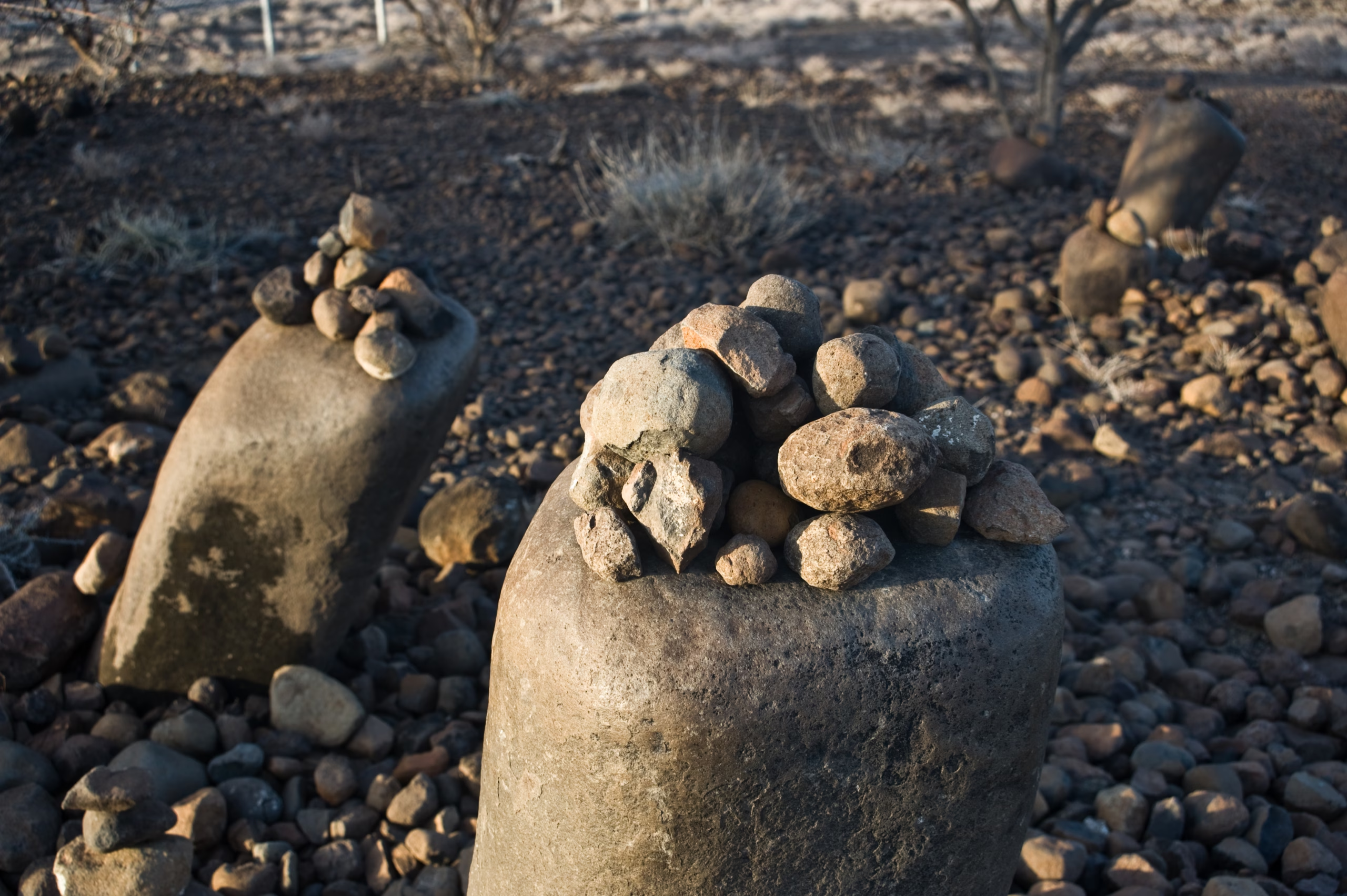
LHEAAPS (Landscape Historical Ecology and Archaeology of Ancient Pastoral Societies in Kenya) aims to reconstruct the past adaptive strategies of East African pastoralists, and their relative resilience to environmental shocks under different systems of land management, rangeland access, and population and livestock densities across Kenya. The research is designed to generate knowledge that has applied value geared toward enhancing the socio-ecological and cultural resilience and sustainable livelihood strategies of contemporary pastoral societies in the face of current global challenges.
Professor Lane details, “Pastoralism has been an extraordinarily resilient livelihood strategy across Africa. This project provides an excellent opportunity to reconstruct how East Africa’s pastoralists responded to significant climate change in the past, and to draw lessons from these adaptations for responding to contemporary climate crises in a region that is witnessing heightened water scarcity and loss of access to critically important grazing lands.”
This research project is funded by an ERC Advanced Grant and is based at the Department of Archaeology, University of Cambridge.