
Fire and Grazing Interactions Control Soil Carbon Storage and Turnover in Global Drylands
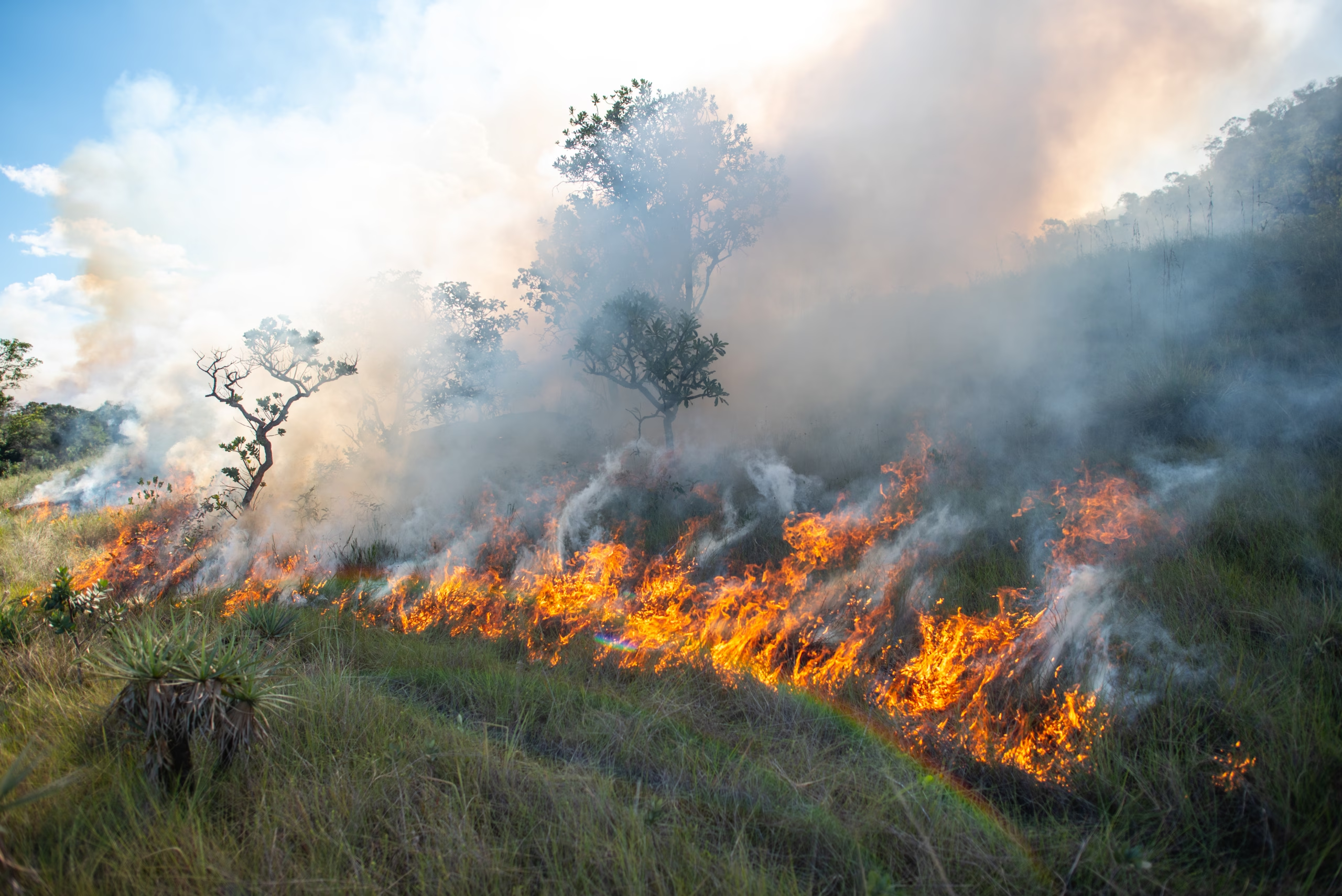
Fire and grazing are dominant disturbances in dryland ecosystems, yet their effects on soil carbon storage and turnover remain poorly constrained. Additionally, these disturbance regimes are heavily altered by human activity and climate change. This project evaluates how variation in fire frequency and grazing intensity influences soil carbon dynamics across global drylands, and the ecological mechanisms underlying these responses. During fieldwork, the researchers sampled sites spanning gradients in fire and grazing regimes, including long-term fire manipulation experiments with differing burn frequencies and sites with contrasting grazing pressures. Across these systems, they quantified soil carbon stocks and turnover rates alongside key ecological variables, including plant biomass inputs and root dynamics.
The data from the fieldwork made it possible to test how disturbance regimes and environmental context shape soil carbon processes and to identify the relative importance of above and below-ground controls. This work aims to provide a mechanistic framework for understanding soil carbon dynamics in drylands and will therefore inform predictions of how carbon storage in these ecosystems will respond to changes in disturbance regimes that are likely to arise with sustained human impact.