
Exploring Diverse Stakeholder Perspectives in Restoration Landscapes
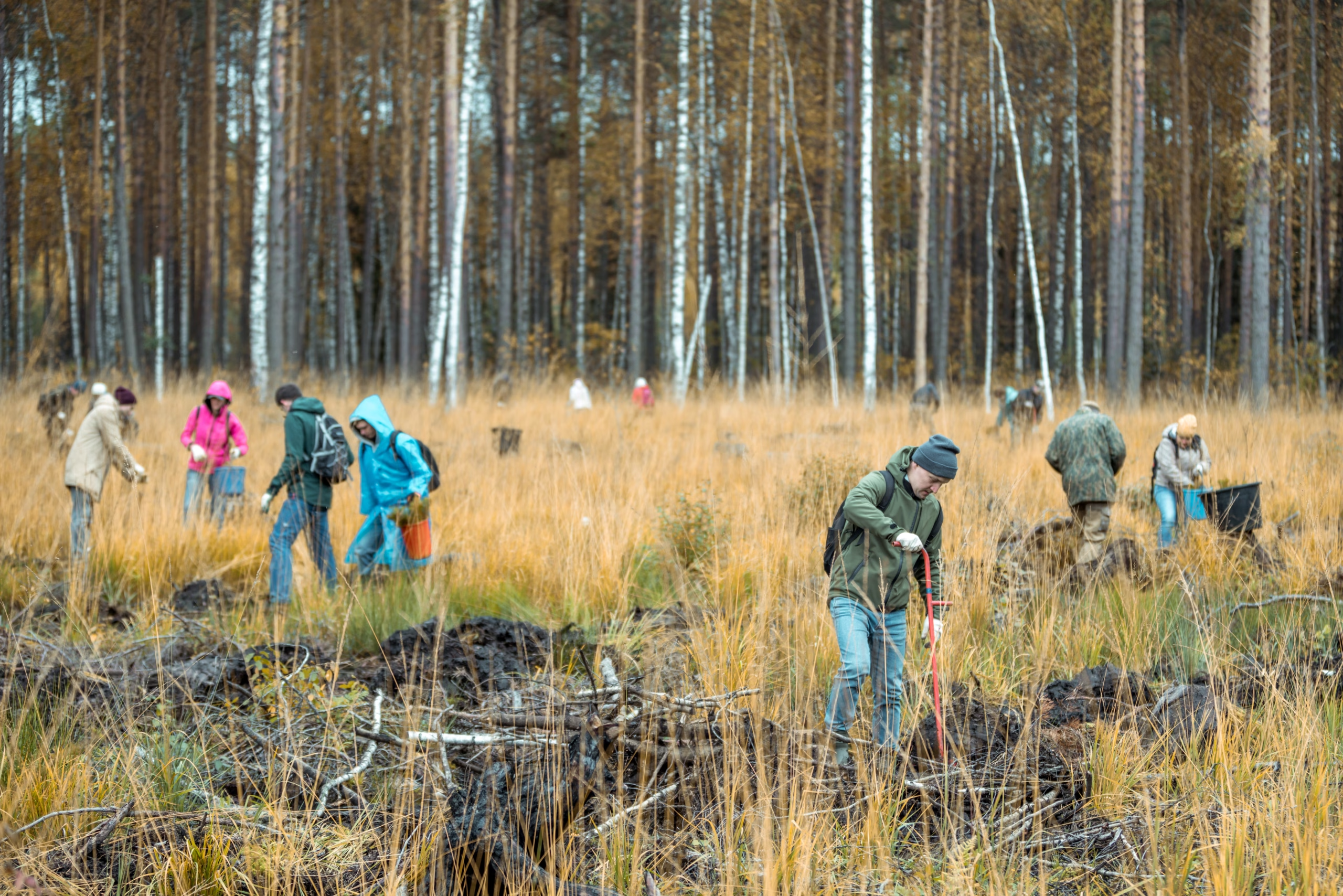
Restoration science continues to provide support for landscape-scale restoration as an effective mechanism by which land can benefit both people and nature. Invariably, however, this type of restoration involves a variety of stakeholders with diverse and sometimes incompatible perspectives on how land should be managed, and to what end. There is a growing consensus that in order to deliver effective and fair restoration, a space is needed to explore the full diversity of these perspectives. However, accessible practical guidance on how to achieve this has received less recognition.
In response, the Restoration Partnership Development (RPD) project created a practical, versatile and user-friendly toolkit based on social science methods for eliciting and exploring stakeholder perspectives. Using a variety of written and digital resources, the toolkit guides practitioners to collect the requisite social science data to understand perspectives, to produce visuals that highlight areas of agreement and disagreement and to run structured workshops where the areas of conflict can be explored respectively and productively.
The toolkit has been widely used in British restoration, including in a number of high profile projects, such as Cumbria Connect and the RENEW Project’s 2024 Annual Biodiversity Parliament. Other organisations, including the Wildlife Trust and the British Academy have also integrated the toolkit into their operations and outputs. By creating this tool, the Cambridge Conservation Research Institute will help many future restoration projects deliver on their pledge to nature by ensuring stakeholders do not feel marginalised.