
Building trust in ecoacoustics within marginalised communities
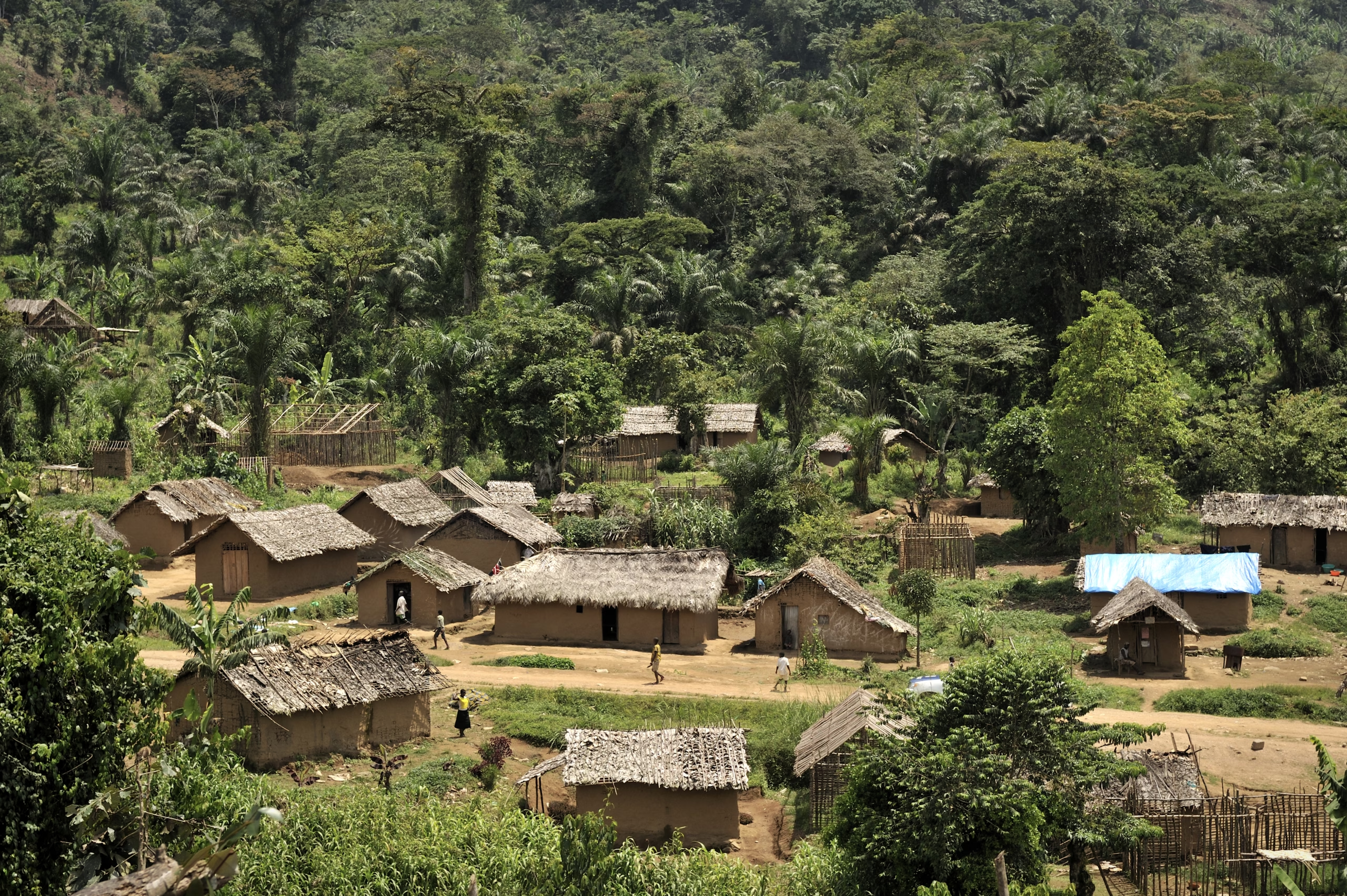
There exists a growing suite of technologies that support significant and exciting progress in biodiversity conservation and research. Ecoacoustics is one such technology, where the auditory characteristics of ecosystems are recorded and analysed to answer pressing questions in conservation. Citizen scientist participation is common in this research and often focuses on data collection and labelling. Yet ongoing challenges exist concerning trust in participatory monitoring projects engaging Indigenous Peoples or local communities. These challenges are rooted in the proliferation of Western-centric approaches to engagement and uneven power dynamics between researchers and participants.
Using passive acoustic monitoring (PAM) as a model, this project explored how researchers can build trust in participatory research with conservation technologies. Working closely with 12 members of a forest fringe community in Ghana, semi-structured interviews were conducted, investigating community members’ perceptions of and concerns with ecoacoustic technologies and a series of participatory workshops exploring ecoacoustic data practices. Through the interviews, 4 key themes were identified – questioning, agency, proof, and knowledge – that shape community members’ sense of trust when engaging with conservation and technology systems or practices.
These engagements highlighted a need for a dynamic consent process, which entails a set of communications and activities tailored to community members’ needs, to ensure they could make informed decisions about their involvement in research projects. To facilitate more ethical and just community engagements that result in higher-quality data and more successful conservation outcomes, researchers working with conservation technologies and marginalised communities should respond to suspicion, address agency, centre community knowledge, and demonstrate data practices.