
Banking on Butterflies: manipulating local topography to help species cope with climate change
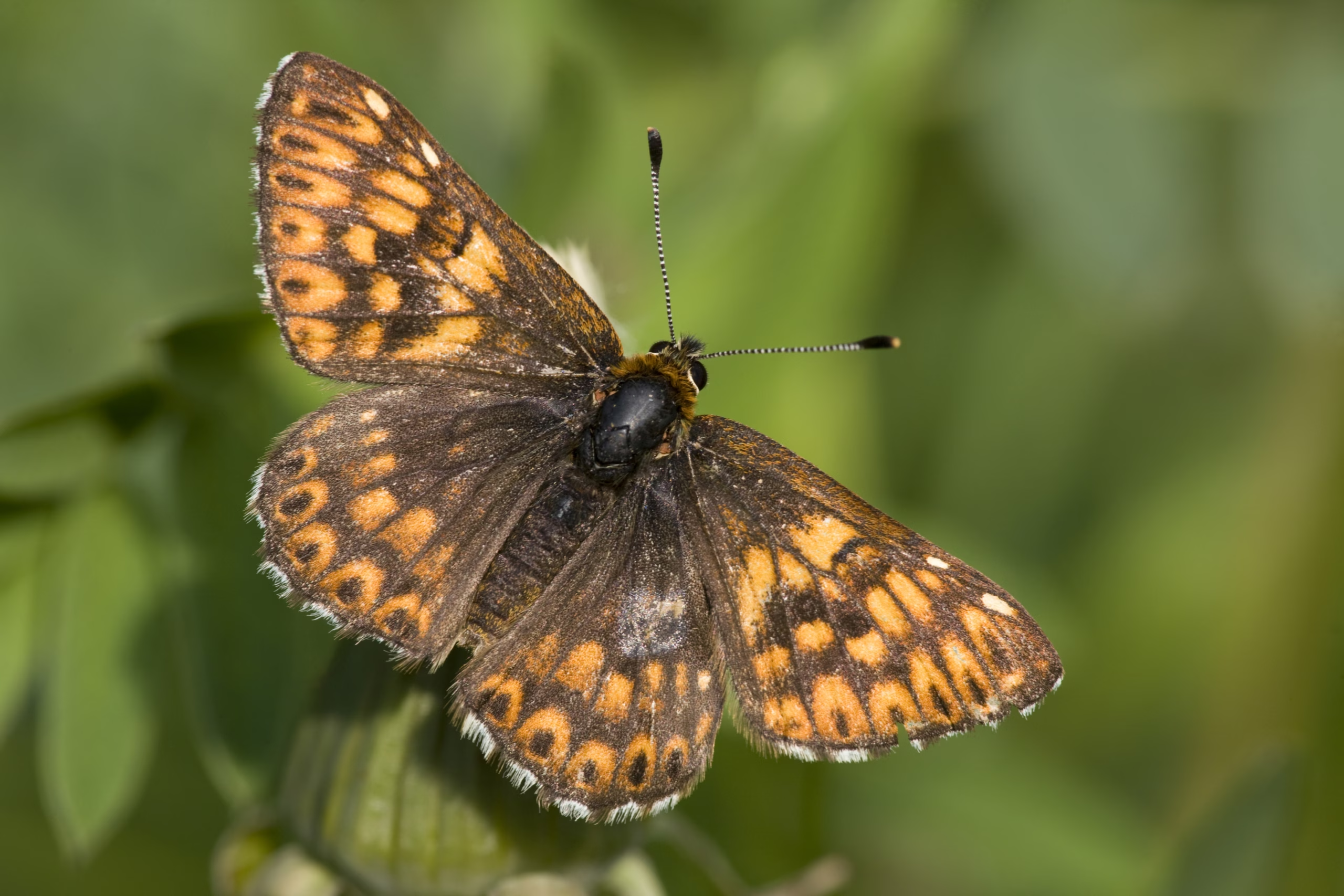
Rising global temperatures and increasing frequency of extreme weather events pose threats to a wide range of animals and plants. Studies have suggested that variation in topography could help protect species from climate change, with slopes of different aspects creating variation in microclimates and cool refuges. However, experimental manipulation of landscapes to test the creation of artificial microclimate refuges is rare. To address this knowledge gap, since 2021 the Insect Ecology Group has worked with conservation practitioners to assess the impacts of building artificial earth butterfly banks.
They found that bank microclimates varied by as much as 30°C between different aspects. Butterflies were inactive during extreme temperatures, but significantly more were present on the shaded slopes of the banks than in surrounding open fields. These results suggest rising regional temperatures could inhibit insect activity levels but that increasing topographic heterogeneity could be a viable way to provide refuges for species during heatwaves.