
AI for urban vegetation and human health
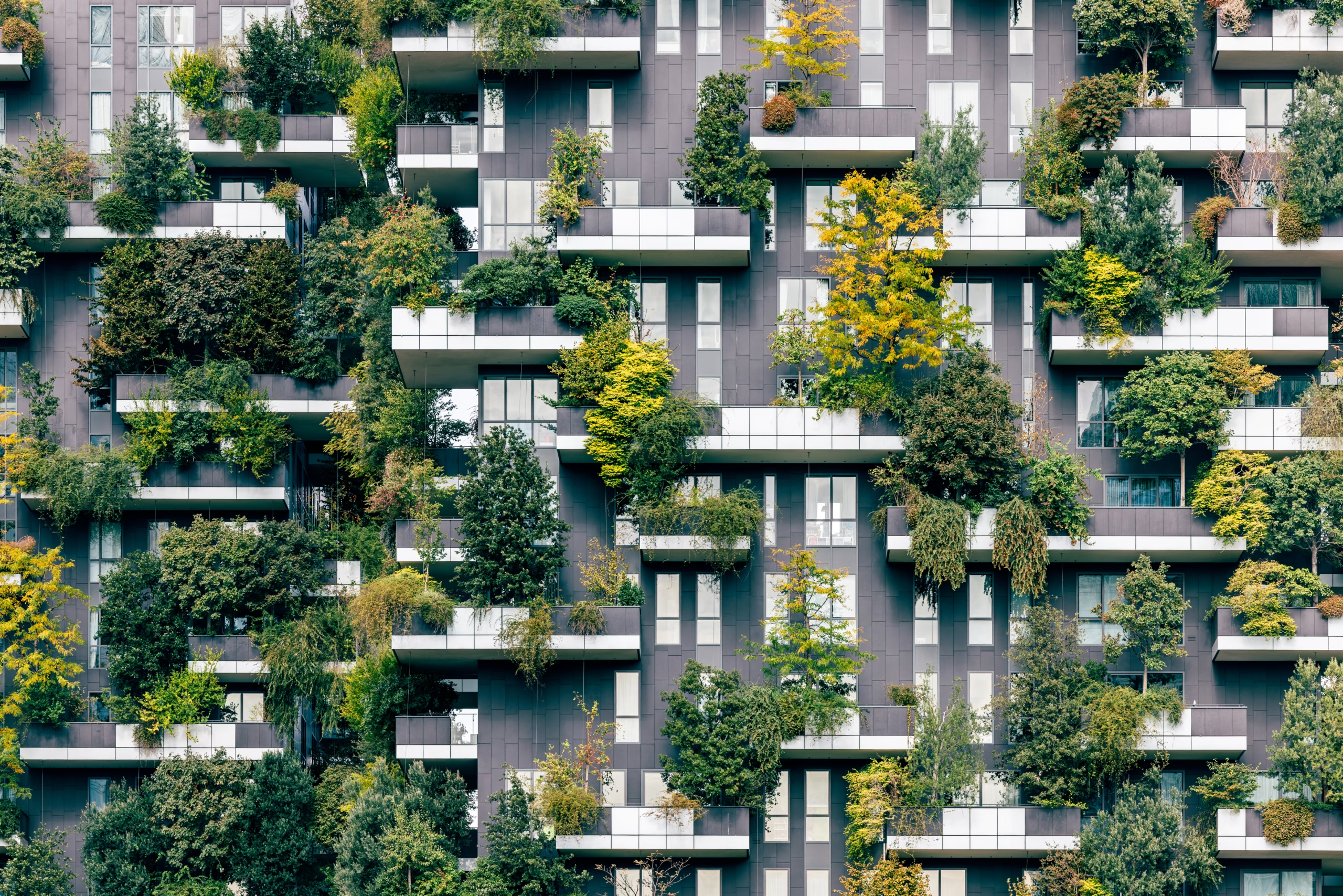
This research explores the application of big data, Artificial Intelligence (AI), and Machine Learning (ML) to map and analyse urban green ecosystems with a focus on equity and health. The core objective is to develop a novel, high-resolution green ecosystem dataset that defines green space systems through measurable equity metrics—enabling cities to assess and act on spatial inequalities in urban greening.
A central focus is the 3:30:300 rule, which posits that every resident should be able to see at least three trees from their home, enjoy 30% tree canopy in their neighbourhood, and live within 300 metres of a quality green space.
The outcome will be a scalable tool for city planners and policymakers to visualise, prioritise, and target green space interventions. By embedding fairness in green infrastructure planning, this research supports climate adaptation, mental and physical health, and social resilience in rapidly urbanising regions.