
Advancing Resilient Food Systems Using the Broad Bean as a Case Study
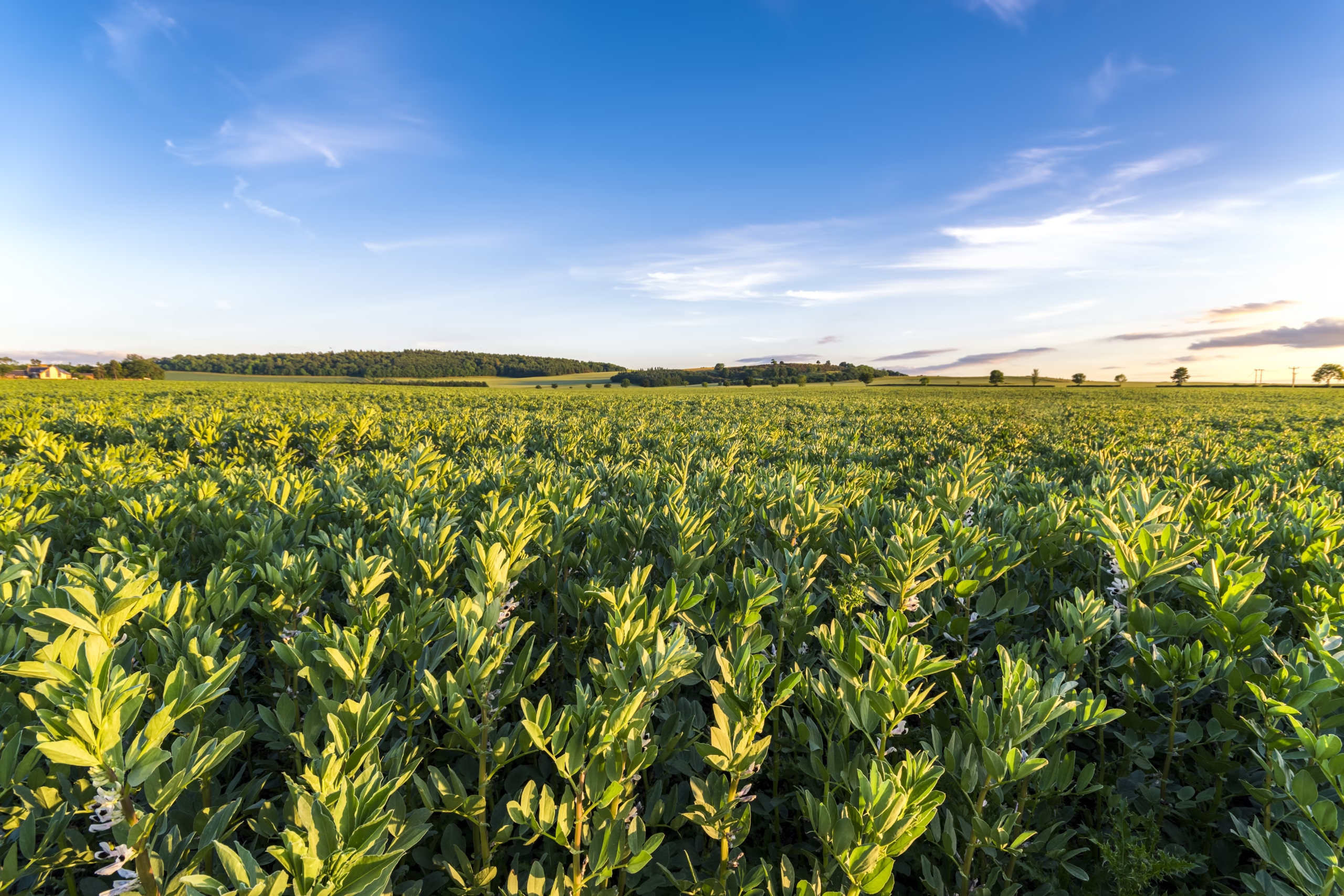
Artificial nitrogenous fertilisers are among the most pervasive ecological pollutants, owing to their widespread use in contemporary agricultural systems. On top of the natural damage they cause, nitrogenous fertilisers are expensive – prohibitively so for many farmers around the world. Legumes, such as peas, beans and pulses, are a useful option for sustainable nitrogen fertilisation as they convert atmospheric nitrogen into a form they can use as nutrients, thus supplanting the need for artificial fertilisers. Broad bean is the UK’s largest legume crop, capable of converting up to 250 kg of sustainable nitrogen per hectare. Despite this potential, the crop is underutilised and its area of production has been declining.
The Broad ‘n Mind project was initiated to address this problem by drawing on comprehensive mapping of the agricultural-food system that engages with two key stakeholder groups: producers and consumers. For producers, plant biotechnology is leveraged to improve seed breeding, making broad bean a more competitive crop for farmers. This includes using synthetic biology approaches to accelerate breeding and engineer new traits in the crop. For consumers, education and awareness campaigns around the mental health benefits of broad beans are essential to stimulate market demand. This in turn encourages farmers to grow the crop and provide food processors and retailers the commercial incentive to stock and market it more widely. Overall, this project serves as a case study in interdisciplinary systems thinking, demonstrating that impactful change for a resilient food system requires both biotechnological innovation and active community engagement.