
Adaptation Labour: Addressing Climate-forced Work
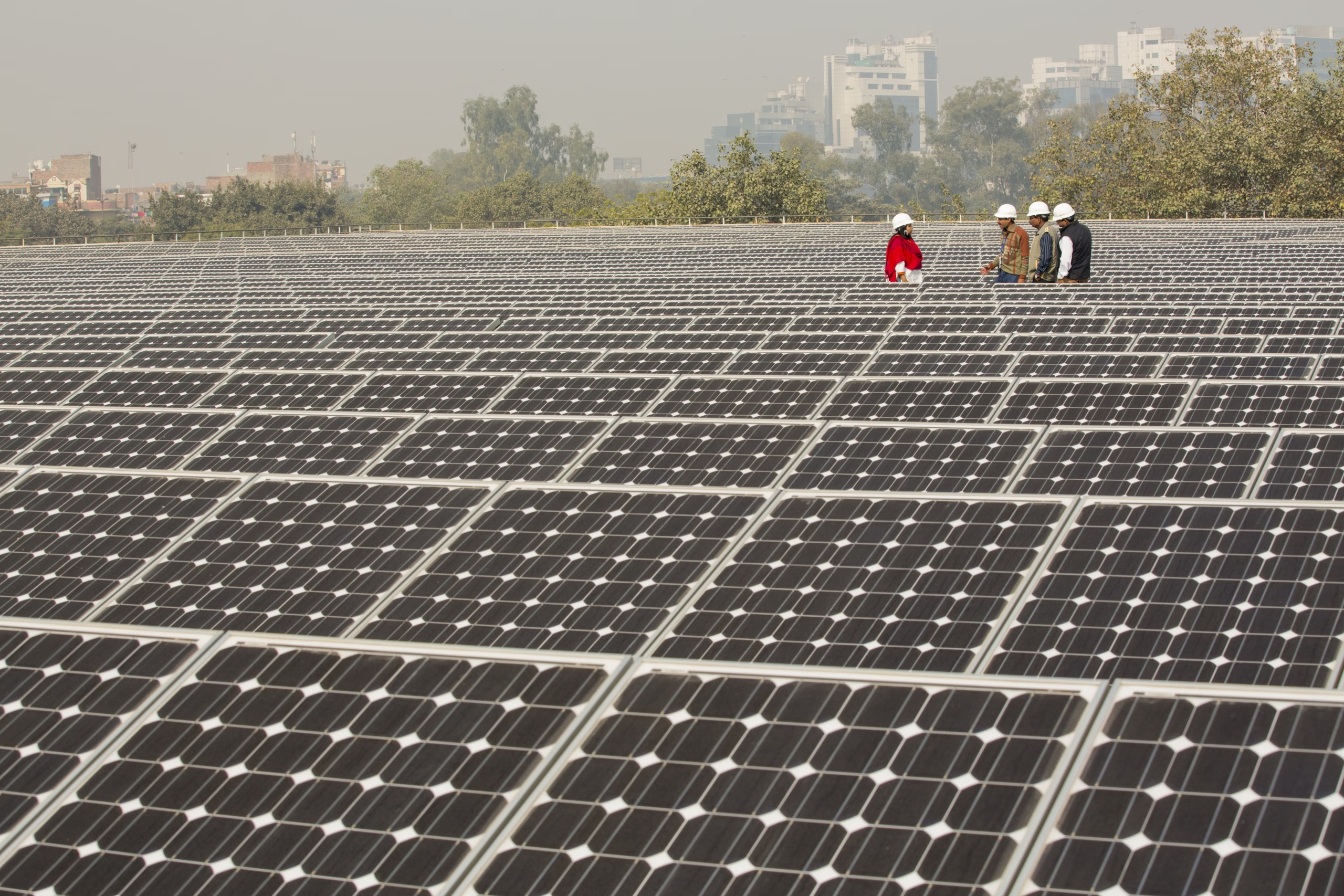
Tackling and adapting to climate change will require profound changes to infrastructure, economies, and the ways in which societies organise and undertake work. Across the globe, these transformations will depend on human labour: from constructing resilient infrastructure and restoring ecosystems to maintaining essential services under increasingly volatile climatic conditions. Much of the debate around this transition has focused on the potential for climate action to generate employment, with advocates frequently presenting decarbonisation and adaptation as sources of expanding “green” job markets. Yet this framing tends to privilege formal, paid employment and risks overlooking the substantial volume of work already being undertaken in response to climate impacts outside conventional labour markets.
This research introduces the concept of ‘adaptation labour’ – a new category of labour whose existence, form, or function is significantly shaped by climate change. It argues that the work being undertaken to adapt to climate change is largely informal, unpaid, and on a scale similar to global care labour. It presents a novel taxonomy of this labour, encompassing formal, informal, and unpaid contexts to demonstrate why this work is not yet taken into account by the just transition. Lastly, it argues that the invisibility of this work to policymakers presents a systemic risk to National Adaptation Plans.