
Digitising Plant and Animal Collections at Cambridge and Oxford
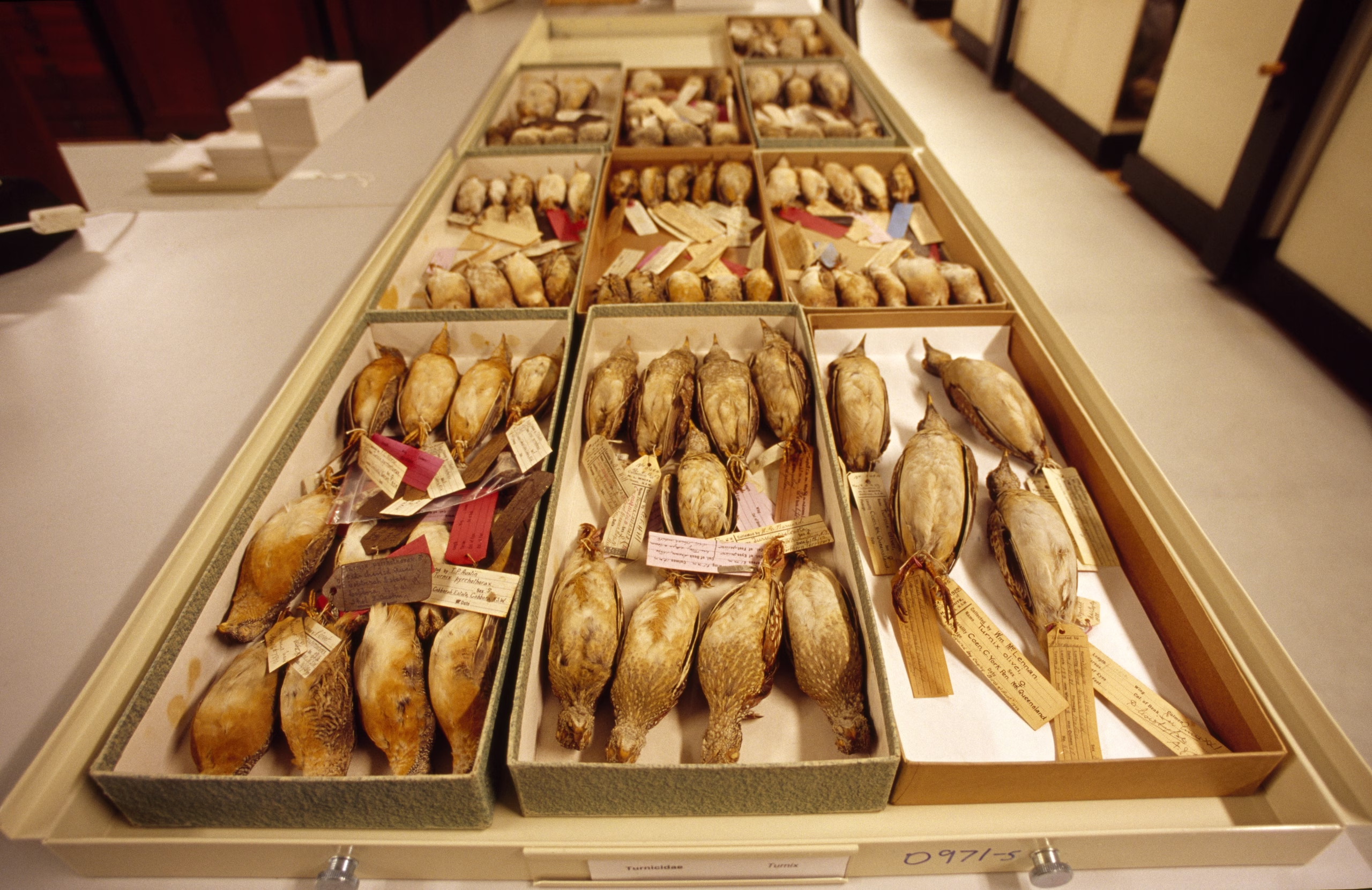
Natural history collections contain a largely untapped wealth of biological records, extending well into pre-industrial times. Consequently, these collections are invaluable data sources for research that seeks to understand the impact of anthropogenic climate warming on biodiversity. Equitable and straightforward access to these records should therefore be a priority. However, natural history collections are generally isolated within institutions, and often require extended correspondence with members of staff to negotiate access. This can result in collections becoming inaccessible for scientific research, hampering progress towards nature conservation in the face of climate change.
This ambitious project will significantly reduce this barrier to research by digitising museum specimens. In a landmark collaboration between the universities of Cambridge and Oxford, over 1.1 million specimens will be digitised, creating a large, openly available online dataset for researchers to use when answering pressing questions about how climate change affects biodiversity in Britain.
Cambridge’s contribution will span the Departments of Plant Sciences and Zoology, including many species of plants and insects. Natural history collections, such as those at Cambridge, tend to have a strong regional focus, meaning the bulk of data on a single species might be locked in a single collection. Digitising these plant and insect specimens is therefore especially valuable, as it gives researchers at other universities access to species-level data at a scale that was previously unavailable. In this way, Cambridge is furthering research across the country, helping regional communities to tackle biodiversity loss and build climate resilience.