
Sensing Peatlands Under Pressure: Biologically-driven improvements in remote sensing to monitor peatland health
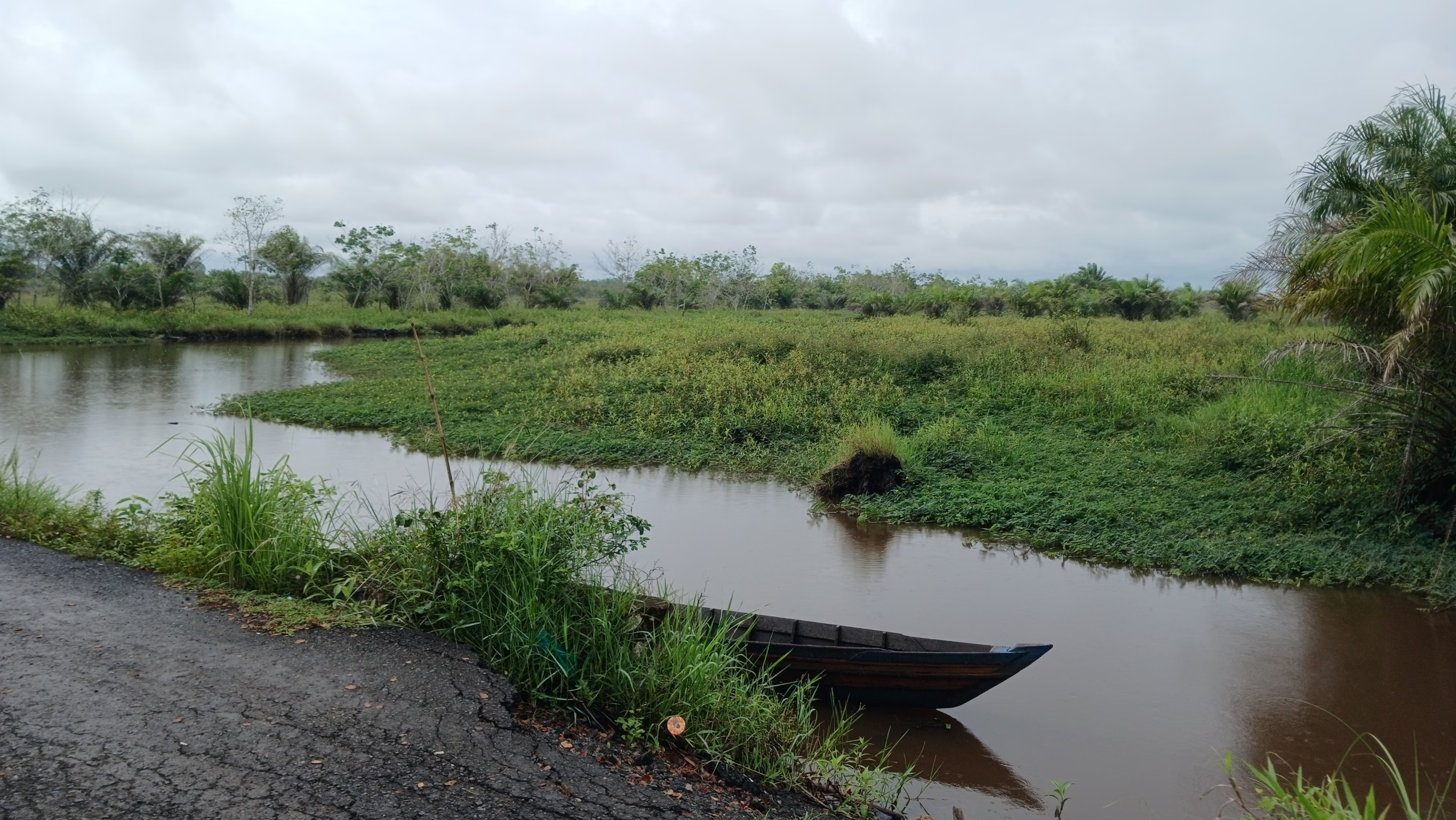
Peatlands cover around 4% of Earth’s land surface yet store a third of global soil carbon. When degraded, they switch from carbon sinks to emissions sources, making restoration a key route for carbon capture. Yet peatlands face increasing stress from heat, drought, and fire. Monitoring peatland health at scale is therefore critical and remote sensing offers a uniquely scalable solution, but realising its full potential requires a mechanistic understanding of the biological processes that drive the signals we detect.
The project will address this through ground-truthing experiments investigating how heat and drought stress affect the thermal, reflectance, and fluorescence signals of peatland vegetation. It integrates physiological measurements with optical remote sensing and high-resolution thermal imaging to establish mechanistic links between stress responses and remotely sensed signals. This work advances our capacity to monitor, protect, and restore peatlands as critical ecosystems for global climate mitigation.