
Aligning Development and Chimpanzee Conservation in Liberia
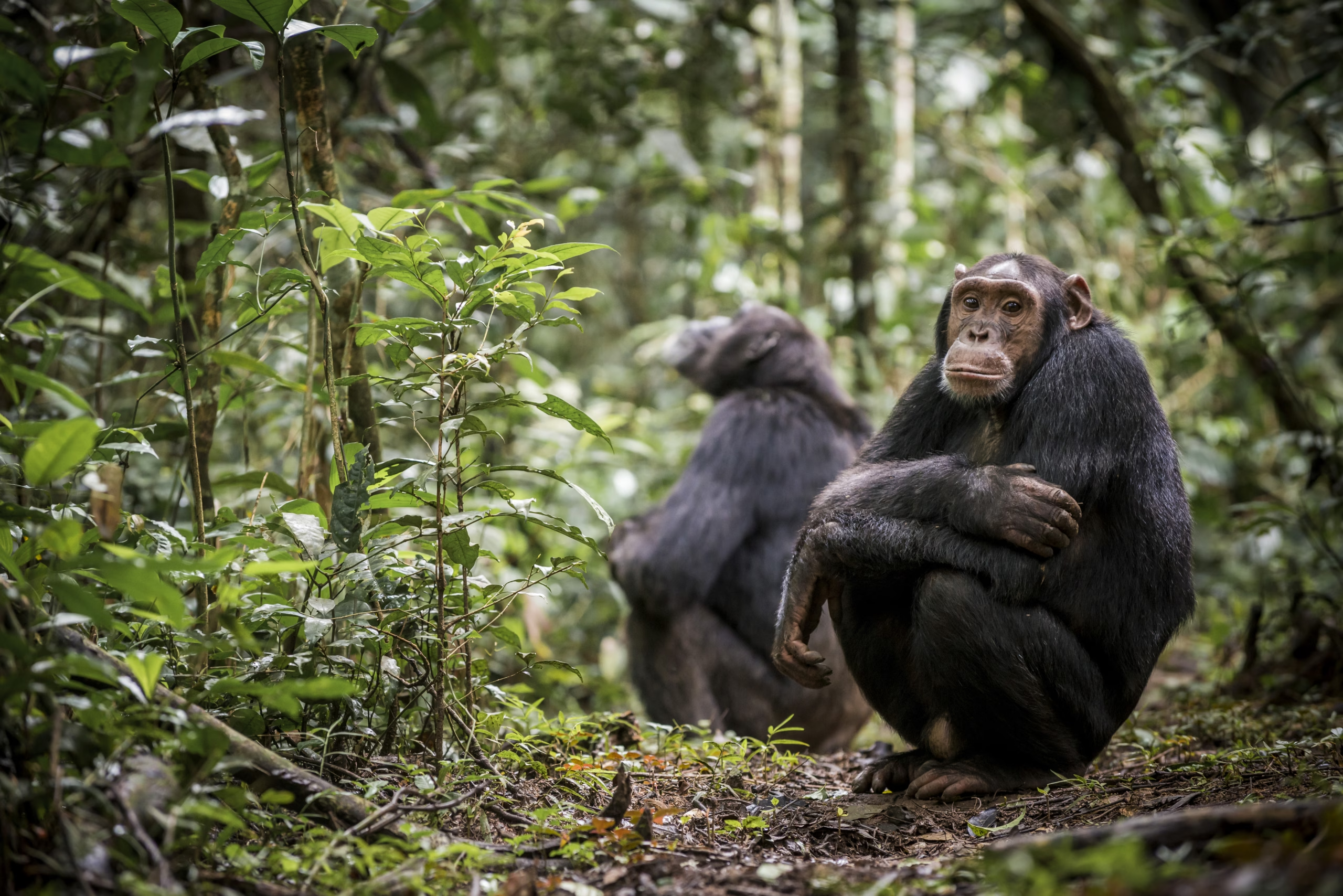
Counterintuitively to some, it is possible for conservation objectives and sustained development to be achieved in tandem. What’s more, conservation interventions often need to support sustainable development to ensure social justice and deliver benefits for nature. In recognition, this work aims to understand how economic transitions can achieve sustained conservation and livelihood improvements in the Upper Guinean Forests to protect and restore Chimpanzee habitats. It will conduct both a regional analysis of sociobioeconomy potentials (economic activities that support biodiversity and local communities, centered on justice and traditional knowledge) and grounded case studies of community perspectives on conservation-compatible business models for nature transformation in areas critical for chimps in Liberia.
These insights will be integrated with regional theories of change that the Conservation and Development Lab developed as part of the broader West African Nature Transformation Initiative at the University of Cambridge and Cambridge Conservation Initiative, through consultations with conservation experts and national officials in the Upper Guinean Forests. These outputs have the potential to catalyse greater recognition of the need for governance and finance improvements in conservation-compatible economic activities in the Upper Guinean Forests. A greater recognition of this necessity will contribute towards a rapid scaling of conservation in line with global targets, while improving the livelihoods of the communities that will be impacted by such scaling.