
Fostering Sustainable Economies Through Participatory Research and Action
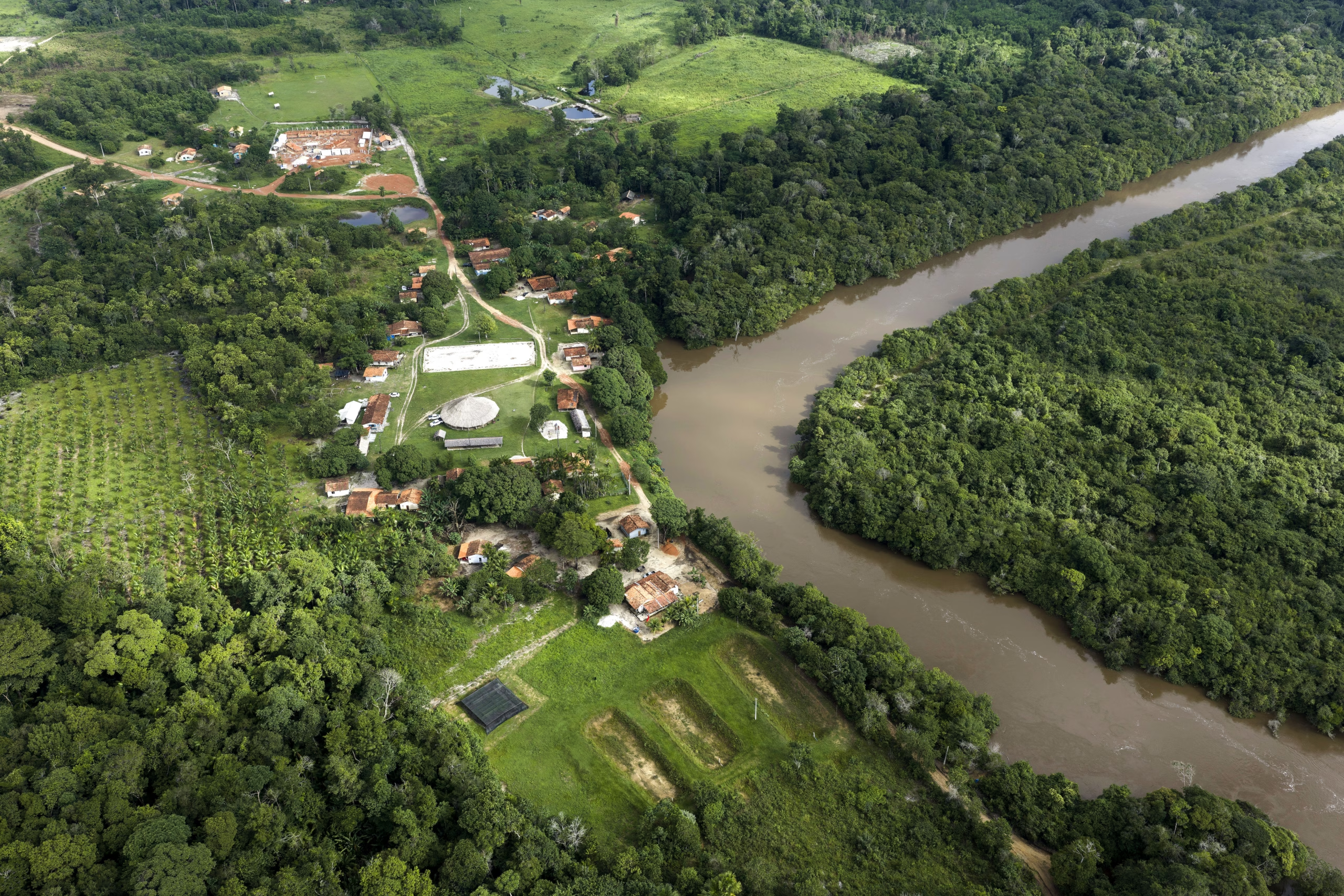
Deforestation is a flagship conservation concern, garnering substantial attention from scientists, governments and the public. Accordingly, various forms of intervention have been employed, dominated by protectionist styles of land management. While such management can slow deforestation rates, it often impinges on the livelihoods of forest-dependent communities by partially or fully excluding them from protected areas. Beyond concerns of social justice, this ultimately undermines conservation objectives, as marginalised local stakeholders retain little incentive to use the forest sustainably. Driven by these developments, there is an ongoing paradigm shift in conservation thinking; interventions can only be effectively implemented with the participation of a diverse range of stakeholders.
Using this style of conservation action, the project adopts a participatory approach to integrate traditional knowledge, sustainable economic models, and technological innovation to promote social equity, environmental conservation, and economic viability in Brazil. Specifically, it explores the potential of agroforestry systems (agricultural areas interspersed with natural forest) as both a viable economic alternative to conventional farming and a tool for ecological restoration. It also investigates the enabling conditions for community-based impact enterprises, including human capital, public policy, and market networks. The project emphasizes the importance of value-added production and appropriate technologies that respect local social, cultural, and ecological contexts.