
AFRI-CAN: Advancing East African Mountain Futures
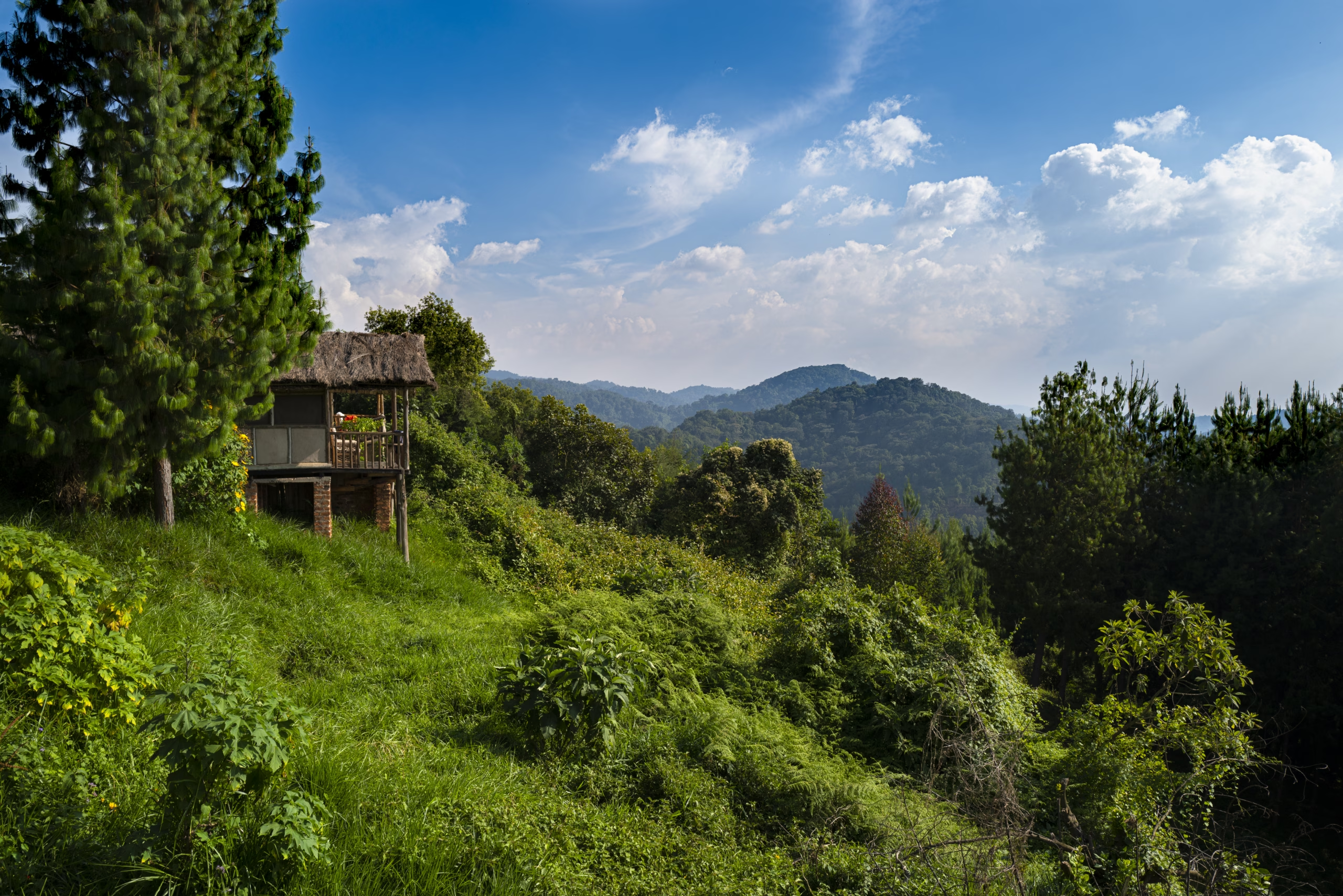
AFRI-CAN is an ambitious interdisciplinary effort to understand how East African mountain ecosystems – and the communities who depend on them – can adapt and thrive in the face of environmental and climatic change.
Mountains around the world are biodiversity hotspots and deliver a wide range of essential ecosystem services, from water and food provision to energy production and carbon sequestration. However, they are increasingly under pressure due to climate change, population growth, biodiversity loss, and agricultural transformation. These challenges affect not only mountain communities but also the surrounding lowlands that rely on highlands for vital resources.
Recognizing the deep interconnections between human and ecological systems, AFRI-CAN focuses on mountain socio-ecological systems across nine contrasting East African mountain settings. It aims to investigate how communities interact with nature, how ecosystems evolve, and which pathways could support sustainable and resilient mountain futures.
To achieve this, they will study the principal services provided by mountain ecosystems (food, energy and water) and biocultural diversity, and investigate how societies have exploited, co-existed with, and even enhanced nature. Observations from these dynamics in the past and present, will guide predictive modelling of future trajectories of change under different scenarios, with the goal of identifying options that will best support eastern Africa’s mountain socioecological systems as future opportunities and challenges emerge.